Sanctuary Cities: Protection for Criminal Aliens
Fact Sheet - Wednesday, August 12, 2026
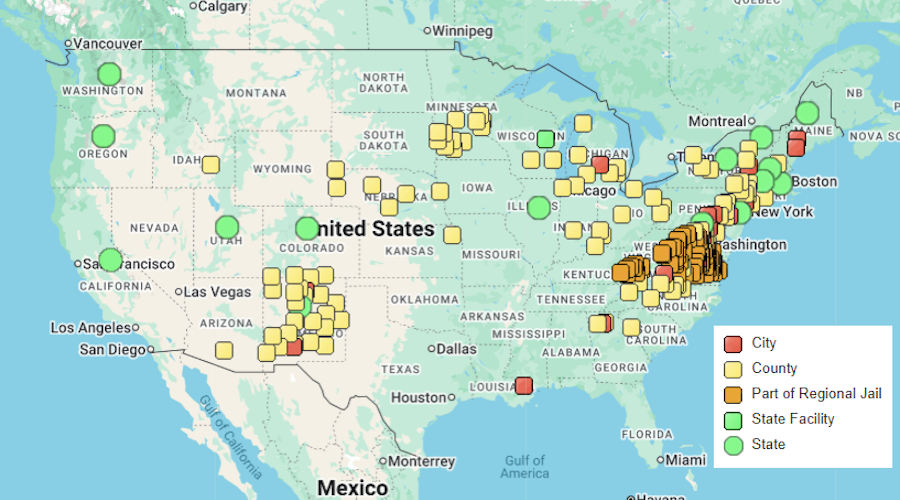
Map courtesy of Center for Immigration Studies
The Basics:
- State and local law enforcement routinely arrest criminal aliens. ICE can issue a detainer request for removable aliens in custody. These detainers ask the custodial jurisdiction to notify ICE before the criminal alien is released from custody, and to hold the alien for up to 48 hours to give ICE officers time to pick him or her up for removal.
- States and cities that implement sanctuary policies refuse to honor ICE detainer requests and even refuse to inform ICE when criminal aliens are in custody. These sanctuary policies are a magnet for criminal aliens, who know they will not be turned over to ICE for removal no matter how many crimes they commit.
- Congress created the 287(g) program to allow local law enforcement to be trained to assist ICE in identifying, locating, and removing criminal aliens from the United States. ICE has signed 1,373 Memorandums of Agreement for 287(g) programs covering 40 states during a concentrated joint effort to remove criminals.
The Problem:
- Recidivism rates for criminals generally are high, and many criminal aliens released in sanctuary jurisdictions reoffend.
- The Center for Immigration Studies reported in 2015 that “State and local sanctuary policies caused the release of more than 8,000 criminal alien offenders sought by ICE for deportation in 276 jurisdictions around the country over an eight-month period.”
- ICE has limited enforcement resources, and searching for fugitives within the interior of the United States is both dangerous and resource-intensive. Picking identified criminal aliens up from state or local jails, on the other hand, ensures that the aliens are unarmed and that family members or neighbors are not in the line of fire.
- While some states do not collect or publish the extent of criminality among their alien population, the State of Texas has found: “According to DHS status indicators, over 466,000 criminal noncitizens have been booked into local Texas jails between June 1, 2011, and December 31, 2025, of which over 335,000 were classified as illegal noncitizens by DHS.”
- Texas also found: “Between June 1, 2011, and December 31, 2025, these 335,000 illegal noncitizens were charged with more than 595,000 criminal offenses which included arrests for 1,112 homicide charges; 77,843 assault charges; 10,531 burglary charges; 69,608 drug charges; 1,515 kidnapping charges; 30,291 theft charges; 47,034 obstructing police charges; 3,382 robbery charges; 7,608 sexual assault charges; 8,647 sexual offense charges; and 7,543 weapon charges.”
- While Florida and Texas cooperate closely with ICE, some states and localities with high illegal alien populations are sanctuary jurisdictions, including New York, California, and Illinois.
LEGISLATIVE RECOMMENDATION: Congress should use funding and other incentives to encourage state and local cooperation with ICE. Detainers should be explicitly made mandatory, and cooperative jurisdictions should receive immunity while carrying out immigration-related functions. Finally, Congress could give victims of illegal-alien crime (or their families) a private right of action to sue jurisdictions that ignore Federal law and release criminal aliens who go on to commit crimes.
ADMINISTRATIVE RECOMMENDATION: The administration should explore all avenues to avoid rewarding jurisdictions that violate Federal law or otherwise inhibit immigration enforcement efforts. In addition to using funding to incentivize and/or reward cooperation, the administration should publicize, by jurisdiction, lists of the crimes committed by aliens who were released despite being subject to detainers. It should also move Federal assets out of sanctuary jurisdictions and explore visa restrictions for aliens planning to work in sanctuary jurisdictions.
Download Fact Sheet

Report - Mass Deportation Playbook
Fact Sheet - The U.S. Immigration System
Letter - Permanent Trump Secure Border Act Endorsement

Fact Sheet - 287(g): Helping States Help Themselves