
287(g): Helping States Help Themselves
Fact Sheet - Wednesday, June 3, 2026
The Basics:
- 287(g) is a program created by Congress to allow state and local law enforcement to cooperate with Immigration and Customs Enforcement (ICE) to safely remove illegal and/or criminal aliens from the United States when they are apprehended in communities.
- It is named the “287(g) program” because it is codified in Section 287(g) of the Immigration and Nationality Act (INA).
- The program was created in 1996, when Congress passed the Illegal Immigration Reform and Immigrant Responsibility Act on a bipartisan vote.
- 287(g) agreements are voluntary for state and local officials. There is no federal mandate for state or local law enforcement to assist with immigration enforcement.
- On January 20, 2025, President Trump issued Executive Order (EO) 14159, Protecting the American People Against Invasion. This EO requires ICE to enter into 287(g) agreements with state and local law enforcement officials, as the Secretary of Homeland Security determines are qualified and appropriate, to the maximum extent permitted by law.
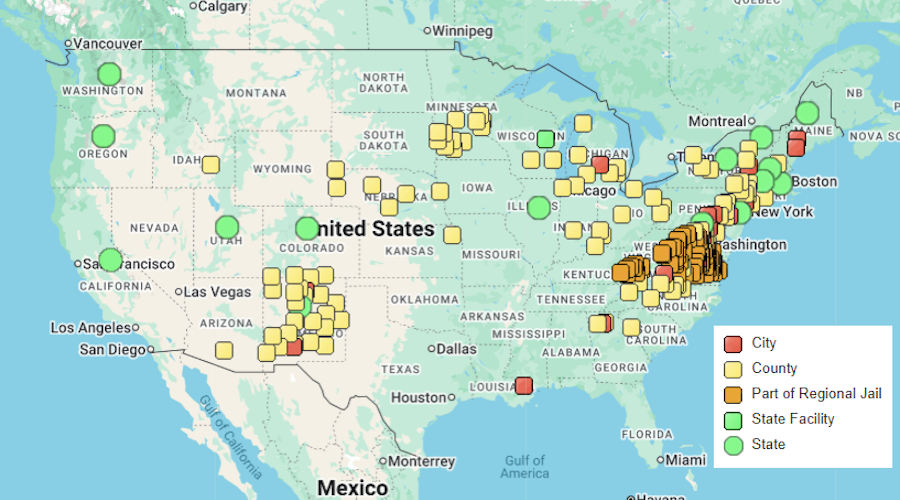
- During the second Trump Administration, ICE has signed 1,870 Memoranda of Agreement for 287(g) programs covering 39 states and localities.
- Currently, there are four distinct 287(g) programs for state and local officials to choose from:
- The Jail Enforcement Model is designed to allow state and local officials to identify and process removable aliens—with criminal or pending criminal charges—who are arrested by state or local law enforcement agencies.
- The Task Force Model serves as a force multiplier for law enforcement agencies. State and local officers are granted limited immigration enforcement authority to be exercised with ICE oversight during their routine police duties.
- The Tribal Task Force Model serves as a force multiplier for tribal law enforcement agencies to engage in limited immigration enforcement with ICE oversight under 25 USC 2804.
- The Warrant Service Officer Program allows ICE to train, certify and authorize state and local law enforcement officers to serve and execute administrative warrants on aliens in their agency’s jail.
The Problem:
- Sanctuary Jurisdictions
- States with large populations of illegal aliens, like California, Illinois, and Massachusetts, along with New Mexico, Maine, and Delaware, have declared themselves “sanctuary states” and blocked any cooperation with ICE. Even if local law enforcement in these states would like to cooperate with ICE to protect their communities, they are prohibited from doing so by state law.
- In addition to sanctuary states, many local jurisdictions also have declared themselves to be sanctuaries for illegal and criminal aliens by adopting measures that prohibit cooperation between local law enforcement and ICE.
- The result of these policies is that illegal aliens and criminal aliens are released back into American communities, rather than being removed from the country by ICE. These aliens too often go on to victimize more Americans.
- Litigation against state and local law enforcement agencies that have honored ICE detainers has chilled cooperation.
- A detainer is an official request from ICE to notify ICE officers pending the release from jail of an illegal or criminal alien, and to hold the alien for up to 48 hours so the alien can be picked up and removed by ICE.
LEGISLATIVE RECOMMENDATION: Congress should pass H.R. 7640, the Shut Down Sanctuary Policies Act, introduced by Rep. Tom McClintock (R-CA). This bill would strip federal funds from jurisdictions that refuse to cooperate with federal immigration enforcement, mandate compliance with ICE detainers to ensure the detention of illegal aliens, and empower victims to sue local governments that release criminal illegal aliens back into the community.
ADMINISTRATIVE RECOMMENDATION: ICE should prioritize the Task Force Model in new and renewing 287(g) agreements, since this model provides more flexibility to state and local law enforcement in the ways in which they can assist ICE. The Task Force Model encompasses the other three models, but is not limited to them.
ICE should also regularly publish the number of detainers ignored by state and local law enforcement agencies, the name of the state or local official in charge of the agency, and whether the jurisdiction has a sanctuary policy. The data should also include information about the aliens for whom the detainers were issued, including the criminal charges against the alien, any prior criminal history, and the alien’s immigration status.
Download Fact Sheet

Report - Mass Deportation Playbook

Fact Sheet - The U.S. Immigration System
Fact Sheet - Sanctuary Cities: Protection for Criminal Aliens
Letter - Permanent Trump Secure Border Act Endorsement