
Government funding at top of Lame-Duck Congress to-do list
With Democrats winning control of both chambers of Congress, many are trying to predict what will happen next. But before we get there, the 119th Congress returns next week for a six-week lame-duck session focused on funding the federal government before the current continuing resolution (CR) expires on December 11.
Republican leaders have several options:
- Pass another CR that extends funding into early next year, or even until September 30, 2027.
- Pass an omnibus spending bill to fund the federal government through the end of the fiscal year (Sept. 30, 2027).
- Extend the current CR for a few days or weeks to buy time to finalize a larger spending package.
- Pass some combination of the above, including a CR and Omnibus (commonly called a “cromnibus”).
The GOP’s second budget reconciliation bill, the Secure America Act, secured funding for Immigration and Customs Enforcement (ICE) and Border Patrol operations through FY2029, so immigration enforcement funding is theoretically set. The top Democrat on the House Appropriations Committee, Rep. Rosa DeLauro (D-CT), sent a letter to her colleagues saying she was going to attack that funding through the appropriations process:
“At the same time, we must claw back billions of dollars Republicans unilaterally provided to Border Patrol, ICE, and the Pentagon through budget reconciliation in an end run outside of the Appropriations Committee.”
The real concern is what other provisions might be inserted into a larger spending bill or the National Defense Authorization Act if Congress goes that route during the lame-duck session:
- Cheap Labor Visas: Just last week, 34 Senators signed a letter urging the Department of Homeland Security (DHS) to raise the number of H-2B visas above the annual limit of 66,000. Under the existing CR, DHS has the authority to increase the cap, meaning a larger spending bill could preserve that authority or directly insert an increase—a move lawmakers have made in the past. Previous appropriations bills have quadrupled H-2B visas, dramatically increased H-2A visas, and moved carnival workers into an uncapped visa category, though the latter two provisions have never been enacted into law.
- Afghan Adjustment Act: Bipartisan support remains for granting green cards to tens of thousands of Afghan nationals. However, DHS’s Inspector General reported widespread fraud within the program, and several Afghan nationals have been charged with violent crimes since arriving in the United States.
- Limits on Enforcement: Even during the past two years of Republican control, the appropriations committee showed a willingness to strictly limit the ability of the Trump Administration to enforce immigration law, which could function as a de facto amnesty for certain illegal aliens.
Beyond the spending bill, Democrats and moderate Republicans may push for a mass amnesty bill during the lame-duck session. At the end of June, Rep. Glenn Thompson (R-PA) introduced the Securing Agriculture's Workforce Act (H.R. 9535), which would grant amnesty to over one million illegal farm workers and the employers that hired them. More than 50 Republicans have cosponsored the bill; many have lost their re-election bids or are retiring, so they don't care about voter pushback.
Rep. Maria Salazar (R-FL) has also pushed her Dignity Act (H.R. 4393), introduced in July of 2025, which would grant amnesty to millions of illegal aliens. She has been lobbying the White House for support, and amnesty advocates within the Trump Administration may view the lame-duck period as their best window to pass legislation. Rep. Salazar's re-election race has not yet been officially called, though she holds a 1,000-vote lead with 99 percent of the votes counted.
Lastly, the discharge petition on the Democrats’ American Dream and Promise Act (H.R. 1589) is one signature shy of 218, which would force it to the House floor for a vote. This bill would grant amnesty to millions of so-called DREAMers and illegal aliens who were granted Temporary Protected Status. It is entirely possible that one more of the moderate Republicans who lost re-election or is retiring will sign the petition in the coming month (Republican Reps. Salazar, Bacon, and Fitzpatrick have already signed it).
Early Look at 2027
Exit polling from Tuesday's election clearly shows that Democrats' sweeping gains were largely tied to the war in Iran, gas and diesel prices, and the overall economy. However, polling also revealed that immigration was the strongest issue for voters supporting Republican candidates. Still, Pres. Trump told Fox News on Tuesday night that immigration is one area where he believes he can work with Democrats once they take control of Congress in 2027.
It is too early to tell whether Democrats will pursue a mass amnesty bill in 2027, but they will likely use must-pass bills to restrict immigration enforcement and leverage their oversight powers to hold hearings and investigations on the topic.
The primary hurdles for Democrats attempting to get a mass amnesty signed into law will be the filibuster and overreach by their own progressive wing. While Democrats could potentially eliminate the filibuster, any passed legislation would still require Pres. Trump's signature—requiring cooperation with the White House. However, many newly elected Democrats have no interest in working with the president, meaning Democratic leadership would have to buck members of their own party to reach a deal.
IAP will be on the front lines fighting any attempts at passing amnesty or derailing immigration enforcement.
Weakness on Immigration Paid Off poorly at the Polls
Grant Newman, Director of Government Relations for the Immigration Accountability Project (IAP), compared Tuesday’s results against IAP Action’s Congressional Immigration Rankings. He found that Republicans with lower scores were significantly more likely to lose re-election.
Republicans in the bottom tier were almost entirely wiped out. Beyond retirements, seven House Republicans—Reps. Brian Fitzpatrick (PA-1), David Valadao (CA-22), Mariannette Miller-Meeks (IA-1), Bill Huizenga (MI-4), Jen Kiggans (VA-2), and Kevin Kiley (CA-6)—lost their seats, alongside Sen. Susan Collins (R-ME). Reps. Salazar (R-FL) and Mario Diaz-Balart (R-FL) may end up as the sole survivors from that group.
By contrast, out of the top 25 highest-ranked Republicans in Congress, only two lost: Rep. Scott Perry (R-PA) didn’t win re-election, and Rep. Mike Collins (R-GA) lost his Senate bid. Rep. Lauren Boebert (R-CO) currently trails her challenger by 3,000 votes with 97% of the vote counted.
As exit polls showed, supporting mass deportations and advocating for reductions in legal immigration and foreign guest workers are popular issues within the Republican base.
You can view the full Congressional Immigration Rankings at IAPAction.com.
Immigration Articles
Department of Homeland Security Secretary Markwayne Mullin announced that Operation Guardian, a three-day enforcement effort across 15 states in late October, resulted in the arrests of more than 230 illegal aliens, including over 40 holding commercial driver’s licenses, as part of the Trump Administration’s broader nationwide crackdown on unauthorized commercial drivers.
The Federalist: Post-Election Data: Immigration Is A Winning Issue For Republicans
Post-election exit polling from NBC News and CNN indicates that immigration enforcement remains a winning issue for Republicans, as the GOP won 51 percent to 47 percent among the 73 percent of voters who called immigration crucial or a major factor, and 57 percent to 42 percent among the 36 percent who deemed it crucial. Meanwhile, the White House and Vice President J.D. Vance publicly rejected rumors of post-midterm amnesty negotiations with Democrats.
House Judiciary Committee: "Boston: The Dangerous Consequences of Sanctuary Policies"
A House Judiciary Committee Subcommittee on Immigration Integrity, Security, and Enforcement interim staff report reveals that Boston’s sanctuary policies led to the release of dangerous criminal aliens back into local communities. The policies prevented the Boston Police Department from honoring all 54 Immigration and Customs Enforcement detainers received in 2026 and resulted in zero detainer transfers since 2021.
Next Week
The House and Senate are finally back in Washington next week, and they have a lot to do, including selecting new leadership for the 120th Congress.

Commentary - Board of Immigration Appeals Cleans Up Precedents to Stop Fraud

Video - Rosemary Jenks: Border Security, Sanctuary Cities, and Guest Workers
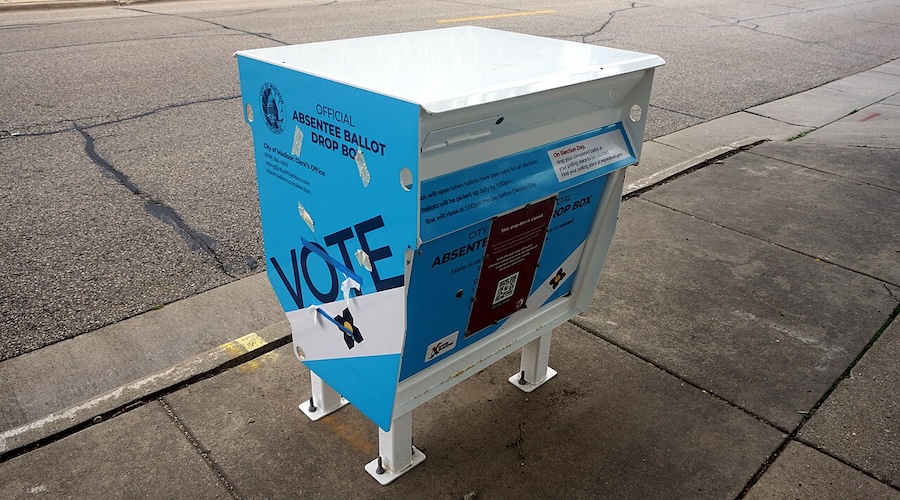
Commentary - U.S. Electoral System is Like a Bank Without a Vault

Commentary - Obama Created the CDL Mess and Trump's Cure is Model to Protect Labor

Video - Rosemary Jenks: H-1B & OPT takes 1.3 million jobs from Americans