U.S. Electoral System is Like a Bank Without a Vault
Commentary - Tuesday, October 6, 2026
By Jared Culver, Legal Analyst
The Department of Justice (DOJ) keeps finding illegal voting in our election system. On October 5, 2026, DOJ announced “charges involving 16 aliens in connection with illegal voting, fraudulent voter registration, and related election crimes across the country.” This announcement is only the latest in a series of such prosecutions.
The opponents of electoral integrity are already trying to discount this seemingly daily dish of new noncitizens found to be voting in defiance of our laws. They claim these arrests are small in number and therefore demonstrate there is no real threat to the electoral system. In any other context, however, the immediate step following the discovery of security vulnerabilities would be to close the loopholes, no matter their size.
What if banks invested no resources in securing deposits because the risk of robbery is low? What if someone tried to sell you a house with no locks on the doors because only three break-ins have occurred in the past five years?
The exposure of a security vulnerability and the discovery of people exploiting the vulnerability demand immediate integrity measures, or the whole system is at risk. No chain is stronger than the weakest link, so why are some politicians and pundits opposed to closing a known vulnerability in our sacred and crucial electoral system?
Massive Vulnerability in the Electoral System
Aggressive DOJ investigations are proving what many have said for a while now: the voter registration process allows for foreign nationals to register to vote, and in many states there are no backend filters to block bad-faith actors from illegally voting. All 50 states issue driver’s licenses, including REAL IDs, to noncitizens who are legally present in the United States. Nineteen states and the District of Columbia issue driver’s licenses to illegal aliens. As a part of that process, the Federal Motor Voter law requires that motor vehicle administrators offer applicants the option to register to vote. The Federal law only requires registrants to “attest” to being U.S. citizens and includes a written warning that aliens are not eligible to register to vote or vote in Federal elections. Voter registration is based entirely on an honor system.
As the arrests the DOJ is making prove, the requirement to “attest” to being a U.S. citizen and fine-print warnings against illegal voting are not a sufficient deterrent to block illegal registration or voting. For operational security, the number of people exploiting a vulnerability is not the determining factor in calculating the risk the vulnerability poses to the system. Rather, the ease with which the vulnerability can be exploited determines the priority for closure. DOJ’s laundry list of charges and convictions so far suggests the vulnerability is vast and exploitation simple:
- On September 30, 2026, the DOJ announced that “ten defendants were separately indicted on September 24, 2026, by a federal grand jury for voter fraud.”
- On September 28, 2026, the DOJ announced “charges and guilty pleas involving 12 individuals, including three illegal aliens, in connection with illegal voting, fraudulent voter registration, and related election crimes across the country. The cases include voting by aliens in federal elections, false claims of U.S. citizenship to register or vote, false statements on citizenship applications, and the alleged disposal of approximately 300 mail-in ballots by a former postal carrier.”
- On September 18, 2026, the DOJ announced “charges against 16 individuals in connection with illegal voting, illegal voter registration, and related election-fraud schemes across the country.”
- On September 14, 2026, the DOJ announced that “an individual in California was arrested and two others were charged for paying people on Skid Row in downtown Los Angeles to sign petitions using stolen identities of registered voters to qualify initiatives on ballots in California elections. Two aliens living in Kansas, and Louisiana were charged for illegally voting. And an individual in Louisiana was charged with fraudulently registering to vote an ineligible voter.”
- On September 5, 2026, the DOJ announced that “five individuals living in Pennsylvania, New Jersey, and Wisconsin were charged this week related to illegal voting in the 2022 or 2024 election.”
This is a non-exhaustive list of election fraud charges from just one month. In most of these cases, noncitizens simply made a false attestation (claim) to be citizens and registered to vote, and some actually voted in elections. They did not need to create elaborate fake documents or present fraudulent proof of eligibility or identity at the polling location. Their crimes did not require intensive expert effort to exploit the electoral vulnerability. They simply signed a form claiming that they are U.S. citizens.
This means that if there has not been massive fraud in prior elections, it has only been by the grace of God because the system did not and could not have protected itself.
The vulnerabilities of an electoral system based on an honor code are also nested within a broader vulnerability regarding government-issued identity documents. For example, on October 2, 2026, an illegal alien from Mexico was sentenced to prison for stealing the identity of a deceased American to receive public benefits. For the millions of illegal aliens inside the United States, identity theft is often used to gain access to public benefits and employment, and to shield an illegal alien’s true identity from law enforcement. A worksite enforcement operation last year discovered approximately 70 illegal aliens using stolen identities, impacting more than 100 American citizens. The DOJ is finding the low-hanging fruit that basically made no effort to disguise their identity as illegal voters.
The Existence of the Vulnerability is More Salient than Examples of Exploitation
Given the lack of enforcement of laws relating to illegal voting in the past, we have no reliable data on the number of noncitizens who have exploited the vulnerabilities in the electoral system. But the number of past violations is irrelevant to the security issue that has been exposed. While it is true that some vulnerabilities within a system may be so difficult to exploit and the cost of securing the vulnerability so high that the cost is not worth the benefit of closing them. However, here, the fix is largely a matter of requiring documentary proof of citizenship to register to vote and requiring presentation of identification proving identity at the time of voting.
This is exactly why the House of Representatives has passed the SAVE America Act four separate times this Congress. This is a very low-cost set of security measures that would have prevented most of the examples of illegal voting presented above. Unfortunately, Senate Democrats have prevented the bill from becoming law.
It is a matter of common sense that an easily exploitable vulnerability in a high-stakes system is inevitably going to be exploited. The United States does not treat other vital national system vulnerabilities with such indifference. No security professional in the private sector working for banks or casinos would treat an exposed security vulnerability with such a laissez-faire attitude. Nor would any reader treat their own homes and possessions similarly. If you discovered the lock on your back door was broken, you wouldn’t ignore it simply because you aren’t aware of anyone ever trying to break in through the back door before.
Free and fair elections are the foundation for our system of government. The necessity of closing known vulnerabilities should be obvious.

Commentary - Obama Created the CDL Mess and Trump's Cure is Model to Protect Labor

Commentary - OP-ED: Cognizant Crackdown
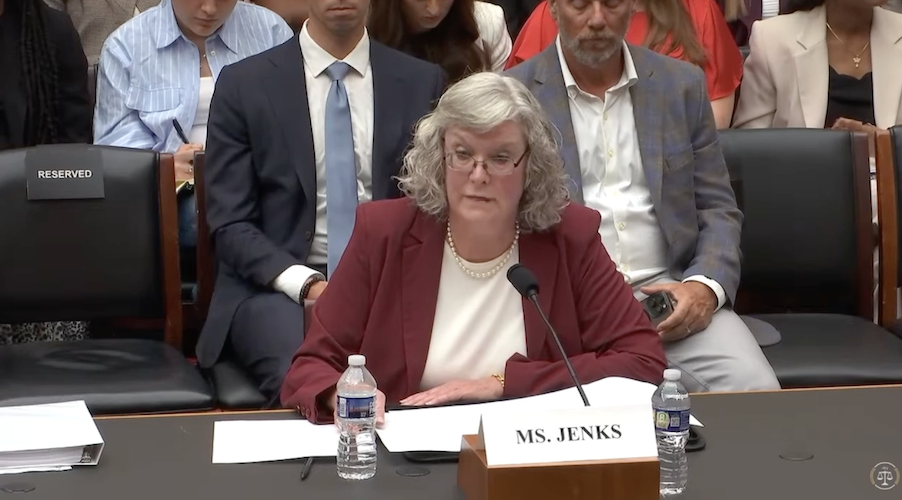
Video - IAP's Rosemary Jenks testifies before House Subcommittee on Birthright Citizenship
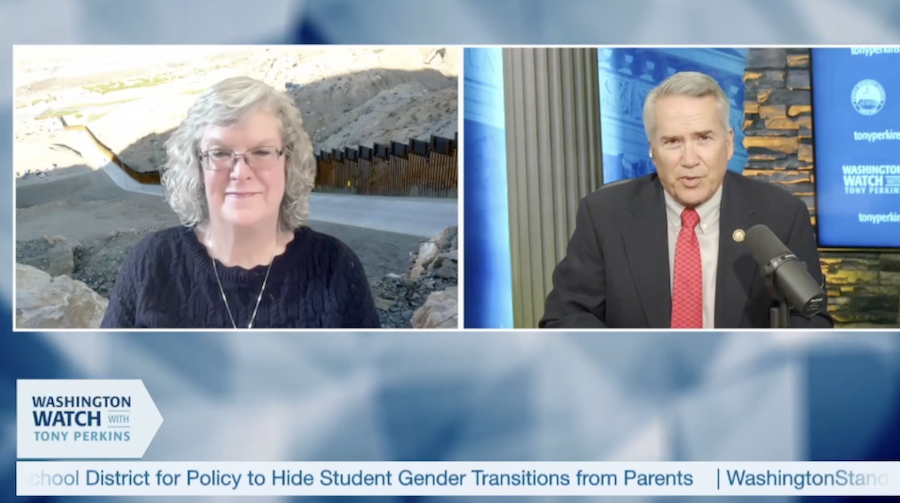
Video - Rosemary Jenks: Supreme Court erred in its Birthright Citizenship decision