GOP looks to fund DHS when Congress returns; House to vote on Haitian amnesty
Congress returns next week from its two-week recess to deal with funding for the Department of Homeland Security (DHS), which has been shut down for two months.
The Senate has twice passed a bill that funds all of DHS except for Immigration and Customs Enforcement (ICE) and part of Border Patrol. Republicans plan to fund ICE and Border Security Operations (the immigration enforcement section of Customs and Border Protection) through the budget reconciliation process. This is the same process used to pass the One Big Beautiful Bill Act, H.R. 1, which provided more than $150 billion in funding for immigration enforcement and border security (this money is currently being used by the President to fund all of DHS).
Conservatives in the House are pushing back against the idea of severing immigration enforcement from general DHS funding. Instead, they're pushing to fund all of DHS through budget reconciliation.
The process begins today. Sen. Lindsey Graham (R-SC), who chairs the Senate Budget Committee, is meeting with the White House to begin crafting a resolution that will start the budget reconciliation process. Both the House and Senate must first approve a budget resolution that outlines what can be included in the budget reconciliation bill. Then they must draft and pass the reconciliation bill.
Pres. Trump has imposed a deadline of June 1 for Congressional Republicans to complete the process and deliver a bill to his desk. However, the One Big Beautiful Bill Act was passed through Graham's committee in February of last year, and the final bill wasn't approved until July. So meeting the president's deadline, especially with razor-thin margins for Republicans in both the House and Senate, will be a difficult task.
The Immigration Accountability Project (IAP) will continue to work with House and Senate Leadership throughout the process to ensure that the final product provides the White House with enough resources to fulfill Pres. Trump's campaign promise "to launch the largest deportation operation in the history of the country."
House GOP moderates renew push on amnesty bill
In a separate development this week, Rep. Maria Salazar (R-FL), joined by Rep. Mike Lawler (R-NY), renewed a push to bring the DIGNIDAD Act, H.R. 4393, into the spotlight. This mass amnesty bill currently has 20 Republican sponsors and 20 Democrat sponsors. (Virtually all Democrats support it, but the authors are metering Democrat sponsors as they convince Republicans to join the effort.) The bill would grant amnesty to more than 10 million illegal aliens, expand legal immigration, and essentially freeze deportations.
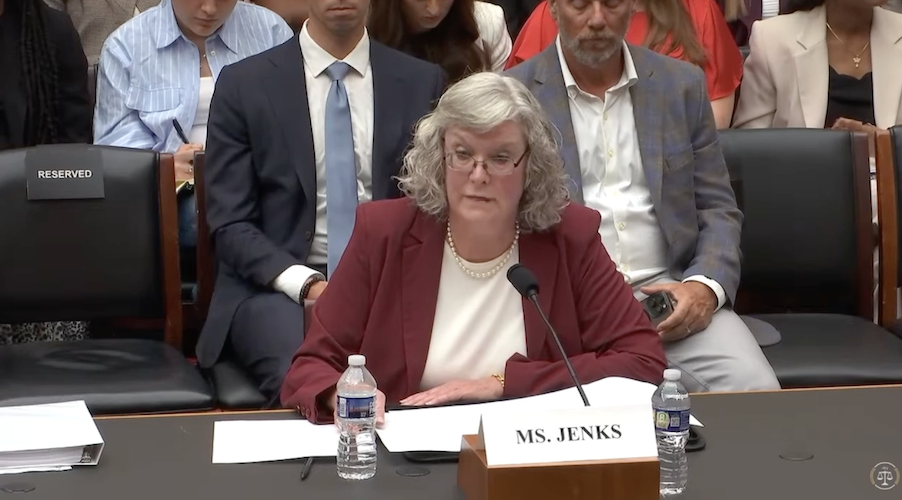
IAP is actively opposing the bill and challenging Representative Salazar’s claims that the legislation does not constitute amnesty. This week, our Cofounder and Policy Director, Rosemary Jenks, joined Steve Bannon’s War Room to discuss the bill's implications and push back against false claims regarding its impact. (Watch the clip here.)
You can view IAP’s analysis of the bill here and the factsheet here.
House to Vote on Amnesty for Haitians
Now that the House and Senate are returning from recess, the House will have to face an amnesty vote resulting from a successful discharge petition signed by 213 Democrats and four Republicans (Rep. Maria Salazar (R-FL), Rep. Mike Lawler (R-NY), Rep. Brian Fitzpatrick (R-PA), and Rep. Don Bacon (R-NE)). With 218 signatures, a discharge petition allows a bill to be brought to the floor without the support of the Speaker of the House. All of those Republicans are cosponsors of the DIGNIDAD Act, as well.
The House Judiciary Committee released a report last year that revealed that 91% of Haitian TPS recipients were illegally brought into the United States by Pres. Biden.
Rep. Foushee falls 17 spots in Congressional Immigration Rankings
Once again, there wasn’t much movement in this week’s release of IAP Action’s Congressional Immigration Rankings due to the recess. However, Rep. Valerie Foushee (D-NC) fell 17 spots to No. 388 overall in the House after cosponsoring a bill that’s rated as Key Legislation by IAP Action. Rep. Foushee cosponsored the Renewing Immigration Provisions of the Immigration Act of 1929, H.R. 4696, which would grant amnesty to any illegal aliens who claim to have been in the country for at least seven years.
Reps. Deborah Ross (D-NC), Frank Pallone (D-NJ), Nellie Pou (D-NJ), and Paul Tonko (D-NY) also fell in this week’s rankings.
You can view the full Immigration Rankings at IAPAction.com.
Immigration Articles
Daily Wire: No Amnesty, No Surrender: Why The DIGNIDAD Act Must Die
Reps. Keith Self (R-TX), Andrew Clyde (R-GA), Sheri Biggs (R-SC), and Randy Fine (R-FL) argue that the DIGNIDAD Act must be rejected because it provides mass amnesty to illegal aliens, which would betray the mandate of American voters to prioritize border enforcement and the rule of law.
White House: Era of Amnesty Is Over: President Trump Restores Rule of Law to Immigration Courts
The White House announced the success of its effort to overhaul immigration courts, which had been key to the Biden Administration’s open-borders effort, providing “quiet amnesty,” as the House Judiciary Committee reported in 2024.
AP: Judge postpones termination of temporary status for Ethiopians
In the latest in lawfare, Biden-appointed U.S. District Judge Brian Murphy blocked the Trump Administration from ending Temporary Protected Status (TPS) for roughly 5,000 Ethiopians, stating, “Fundamental to this case — and indeed to our constitutional system — is the principle that the will of the President does not supersede that of Congress.” Of course, immigration law specifically states, “There is no judicial review of any determination of the Attorney General with respect to the designation, or termination or extension of a designation, of a foreign state under this subsection.” Apparently, Judge Murphy believes his authority supersedes Congress and the President.
Next Week
The House and Senate are returning from a long recess on Monday. The Senate will resume debate of the SAVE America Act and the House will look at how to fund DHS.
Commentary - Board of Immigration Appeals Cleans Up Precedents to Stop Fraud
Commentary - U.S. Electoral System is Like a Bank Without a Vault

Commentary - Obama Created the CDL Mess and Trump's Cure is Model to Protect Labor

Video - Rosemary Jenks: H-1B & OPT takes 1.3 million jobs from Americans

Commentary - OP-ED: Cognizant Crackdown