New Analysis Says H-1B Workers Driving Down Wages
Commentary - Thursday, February 12, 2026
By Jared Culver, Legal Analyst
A new study of H-1B wages shows up to a 30% discount for H-1Bs in certain occupations and an average of 16% discount for H-1Bs compared to American workers similarly situated. This explains why The New York Times published an article with the headline, “Goodbye, $165,000 Tech Jobs. Student Coders Seek Work at Chipotle.” It also explains why young American graduates have the same unemployment rate as those without a college degree. No American worker wins a race to the bottom, and this study is a great example of why wage stagnation has been persistent for decades in the United States. The Trump Administration has made some reforms in an attempt to counter the negative impacts of the program, but the problems are both systemic and the source of the program’s persistent demand.
The Study
The analysis uses the Department of Labor’s (DOL) labor condition application (LCA) and the Department of Homeland Security’s (DHS) I-129 petition filed by H-1B employers that won the H-1B lottery selection process. When combined, these forms provide wage levels, wage rates, occupation codes, and worksite locations. This is compared with survey data of similarly situated American workers. Importantly, the analysis is concentrated on new H-1B hires subject to the numerical cap, as it only studies lottery winners. It excludes the cap-exempt H-1B workers, as well as renewals of previously issued H-1B visas (neither of which are issued based on the lottery process).
The lottery winner population resides predominantly in five major cities: New York, Dallas, San Jose, Seattle, San Francisco. In fact, 25 percent of H-1B lottery winners over the past five years reside in either New York or San Francisco. These locations also are some of the most expensive places to live in the United States. American graduates trying to pay rent in these cities are vulnerable to even the slightest reduction in pay and can be quickly priced out.
Another key point is that H-1B employees rarely change jobs, since their visa is tied to a specific employer. According to the study, only 63,865 H-1B workers out of the total of 680,000 changed jobs in FY 2024. This is a separation rate of 9 percent while the separation rate for average high-skilled American workers is between 20-25 percent. Not only are H-1Bs cheaper, but they are a captive resource. That makes them cheaper still because it is cheaper to keep a worker than hire a new one.
The study found that wage gaps varied across occupations. While many occupations qualify for H-1B, the data shows a certain cluster of occupations account for the bulk of H-1B workers. Software Developers account for 38 percent of all H-1B workers and two-thirds of H-1B workers are working in five occupations. When you stretch out to the top ten occupations for H-1B, they account for roughly three quarters of all H-1B workers. Within this highly condensed program, the occupational wage gap is deeply pronounced. For the largest occupation within H-1B, software developers, the wage gap between H-1Bs and Americans is 30 percent.
Trump Administration Efforts to Stem the Tide
The Trump Administration has swiftly moved to curb the abuses within the H-1B program. The President has applied a $100,000 surcharge for H-1B admissions. This excludes H-1B applicants already in the United States under another status, like students in the Optional Practical Training (OPT) program. Given the significant wage gap between H-1B and native workers, the authors of the study do not believe that the surcharge will alter demand for H-1B: “The simulation of the economic model indicates that the large wage gap between H1B workers and comparable Americans, combined with the excess demand for the visas, implies that imposing fees in the range of $150,000 to $200,000 may not change the demand for H1B workers all that much.”
Additionally, U.S. Citizenship and Immigration Services (USCIS) has changed how the lottery system allocates H-1B visas. Employers offering higher wage levels are weighted to give them a greater likelihood of selection. The goal is to incentivize employers to offer higher wages in order to increase their probability of selection. Combined with the $100,000 surcharge for new entries, this could make a dent in the wage gap observed by the study. However, the new lottery weighing system still allows for lower wage offers to be selected. Since the $100,000 surcharge will also not apply for aliens applying for H-1Bs from within the United States, many H-1B employers will be able to avoid the surcharge and the intended effects of the lottery allocation by wage levels.
Meanwhile, in 2025, DOL created Project Firewall to increase oversight and enforcement against H-1B employers. DOL is working with DHS and the Department of Justice. While the effort is nascent, it has borne some fruit. For example, DOL assessed more civil money penalties against H-1B employers in FY 2025 than they had in the prior four fiscal years combined, and it was the highest total since FY 2019. However, given both the high profitability of exploitation and the massive profits of the companies involved, the paltry level of penalties is not a significant deterrent. Debarment from the program for violators must become status quo and penalties need to become more severe.
The U.S. Labor Market Crisis is Caused by Mass Immigration
Wage stagnation has been destroying Americans’ livelihoods for over four decades. Despite the persistent stagnation of wages, Americans are also experiencing difficulty finding a job. Job losses are reaching recession levels. The study demonstrates how the H-1B program is exacerbating this crisis. It also observes that other visa programs like H-2A are likely having the same impact on wages and job opportunities for American workers.
This is undoubtedly so. One thing the study does not discuss is the rampant discrimination against American workers observed in the H-1B program. In 2025, reports demonstrated how H-1B employers do everything in their power to avoid hiring Americans for open jobs. Companies like Facebook/Meta have been busted discriminating against Americans in the hiring process. This study provides the motive for the systemic discrimination against American workers in the tech industry.
But it does not end with H-1B. Recently, the meat-packing industry has been settling claims and paying millions of dollars stemming from a decades-long wage-fixing conspiracy. The laundry list of slavery, debt bondage, and wage theft in the H-2A program is well documented. While they are on different tiers of skill level, all the employers using foreign labor have the same justification. Despite their claims of a shortage of American workers, the evidence suggests they are targeting foreign workers because they are cheaper and dependent on the employer for their legal status. American workers cannot and should not have to compete with desperate, captive foreign labor for employment.
If the labor supply in America were constricted, then demand for labor would increase wages. That is clearly not happening. The U.S. government pays significant sums of taxpayer money to operationalize all of these visa programs. In other words, taxpayers are funding the programs actively replacing them with cheaper, more compliant labor. With increasing layoffs of Americans, and clear evidence of wrongdoing throughout the system, a moratorium is necessary to alleviate the mounting pressure on American workers. The biggest condemnation of our legal immigration system is that the fraud and exploitation are the point.
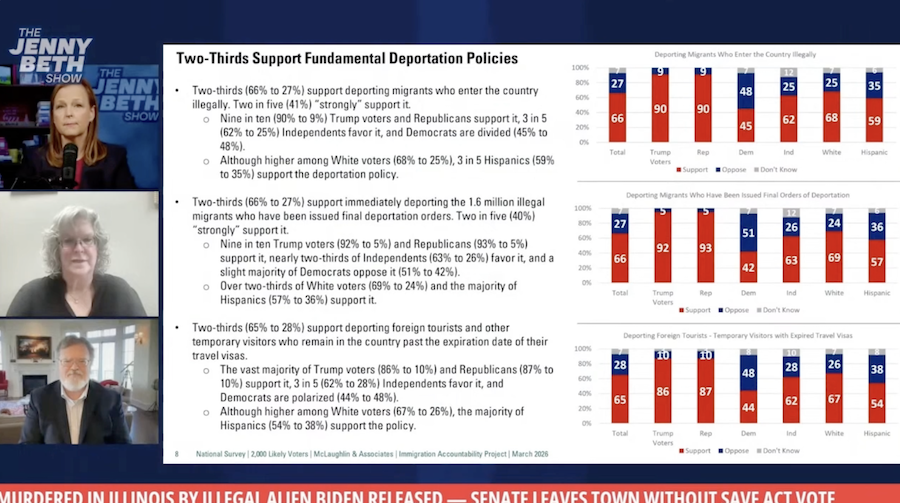
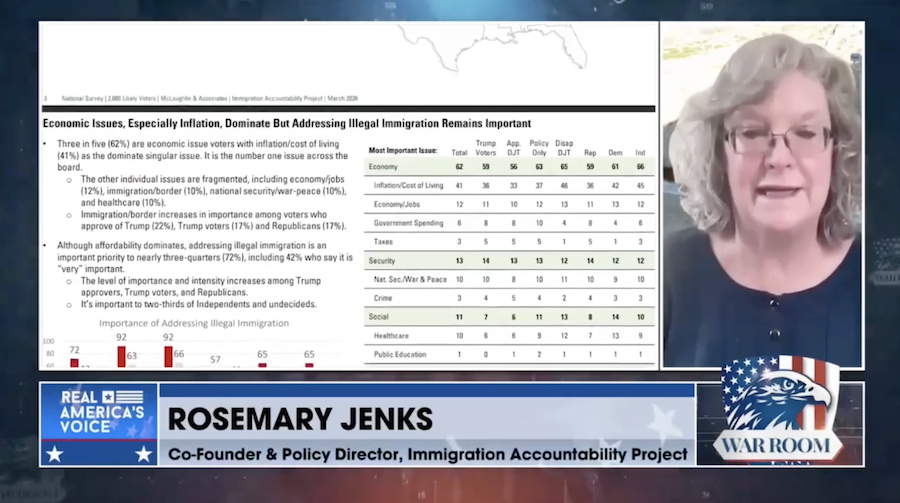
Video - Rosemary Jenks: DHS Shutdown and Support for Mass Deportations

Video - Rosemary Jenks: K St. vs Main St. on Mass Deportations

Video - Rosemary Jenks: GOP needs to choose between donors and voters

Video - Chris Chmielenski: Poll proves what we knew
Commentary - Poll: Americans support Mass Deportations