Judicial Nominees and Faithful Execution of the Law
Commentary - Monday, August 17, 2026
By Jared Culver, Legal Analyst
From 2021 through 2024, without any major legislative changes, the Biden Administration implemented a comprehensive open-borders strategy built on nonenforcement of immigration law and a vast abuse of narrow discretionary power to grant parole and deferred action. They were exceedingly successful and broke all records for illegal entry into the United States.
Observers of the dedicated judicial obstruction against the Trump Administration’s efforts to enforce immigration law and clean up the Biden mess are right to be confused. While the Trump Administration faces near-uniform opposition from Federal district judges, the Biden Administration largely escaped judicial scrutiny. For President Trump and his advisors, this reality must be front and center in their minds during the selection of judicial nominees.
Many current judges see enforcement of immigration law as optional or even unjust/unconstitutional. Bringing foreign nationals into the country illegally is fine, but actually arresting illegal aliens leads to immediate hearings and appeals. The key project for Trump’s advisors is to find judges who reject this idea that immigration laws are only suggestions which may be completely ignored.
It is a curious, but true, observation that judges play an outsized role in immigration policy, and judicial nominees are rarely asked about their jurisprudence on the issue. District Court Judge Dolly Gee has essentially controlled detention policy for children and families for decades under the infamous Flores settlement agreement. Chief Justice John Roberts blocked the termination of Deferred Action for Childhood Arrivals (DACA) because he didn’t think the administration had considered alternatives adequately enough.
The Trump Administration’s battles with lower court injunctions demonstrate how important it is that immigration policy be considered in the selection of judicial nominees. Many conservative originalist thinkers raced to endorse automatic birthright citizenship as the law of the land. The old standard lines about originalism and textualism are inadequate in a world where some District and Circuit Court judges claim the government, absent statutory authority, can import millions of illegal aliens and grant them temporary benefits. And yet, no administration can deport them or end their temporary benefits. This asymmetry turns judges into policy makers and shreds the balance of power between the three branches of government enshrined in the Constitution.
Some Federal judges did indeed block some of President Biden’s craziest policy efforts, like the 2021 deportation freeze. Still, the judiciary did not stop his successful efforts to open the borders in violation of the law. When the Biden Administration made most illegal aliens in the United States safe from deportation as a matter of policy, the Supreme Court allowed that policy to stand, claiming it could not adjudicate the enforcement priorities of the President. At the same time the Biden Administration was claiming they had no resources to remove illegal aliens, they were paroling tens of thousands of aliens monthly at a cost of billions of dollars. The Supreme Court never connected those two dots—no resources for removals, meanwhile, an industrial-scale program for parole.
Laughably, leftist judges gave the Biden Administration more pushback when it attempted to reverse course and limit asylum between ports of entry than some “conservative” justices had when they had chances to block plainly illegal actions. And this fact shows one of the biggest problems with current jurisprudence—namely, that enforcement of the law invites legal challenge. At the same time, a strategy built on inaction is impossible to challenge legally. For immigration issues, this puts the side supporting enforcement of the law at a distinct disadvantage, despite the fact that the laws have been duly enacted by Congress and signed by the president. While Biden policies ignoring enforcement largely escaped swift legal scrutiny, President Trump’s Executive Order ending Birthright Citizenship was subjected to four injunctions in less than one month.
This current judicial asymmetry is one of the primary impediments to mass deportations and sustainable border security. Even if Congress passed stronger laws to reflect American interests in immigration law, future presidents can ignore the law just like Biden did. This is because judges accept broad claims of resource scarcity from presidents while ignoring the Constitution’s requirement that the President faithfully execute the laws.
This is where Trump's advisors should press potential judicial nominees. The Constitution clearly requires that the elected president faithfully execute the laws. The president does not have the option of simply ignoring the laws he doesn’t like. Even President Obama made this exact point in his first term, as immigration activists demanded he ignore the law and give amnesty to illegal aliens by executive action. He said repeatedly that he was no king and that he had to enforce immigration law. Of course, his position “evolved” by 2012, when he announced that he could ignore immigration law and provide amnesty to illegal aliens through DACA.
Judicial nominees should express extreme skepticism toward legal arguments that ignore the president’s duty to enforce the law. Presidential claims of lack of resources to enforce the law should be treated with strict scrutiny. If a president claims he has limited resources for deporting illegal aliens while simultaneously expending vast resources to parole illegal aliens into the country, then judges should reject the argument from the executive. In other words, the President cannot divert enforcement resources to paroling aliens and also claim he lacks resources to deport illegal aliens. That clearly violates his duty to enforce the law.
We need a proactive response to the current madness. Judges are making policy decisions to block the president from enforcing the law as the statutes clearly require. This is because, for decades, judges have imposed their political will, rather than interpreting the laws as they are written, and there have been no ramifications. According to the Constitution, Congress makes the law, the president enforces the law, and judges interpret the law. All three must be held accountable for carrying out their constitutional duties. Otherwise, there is no balance of power and the U.S. Constitution falls.
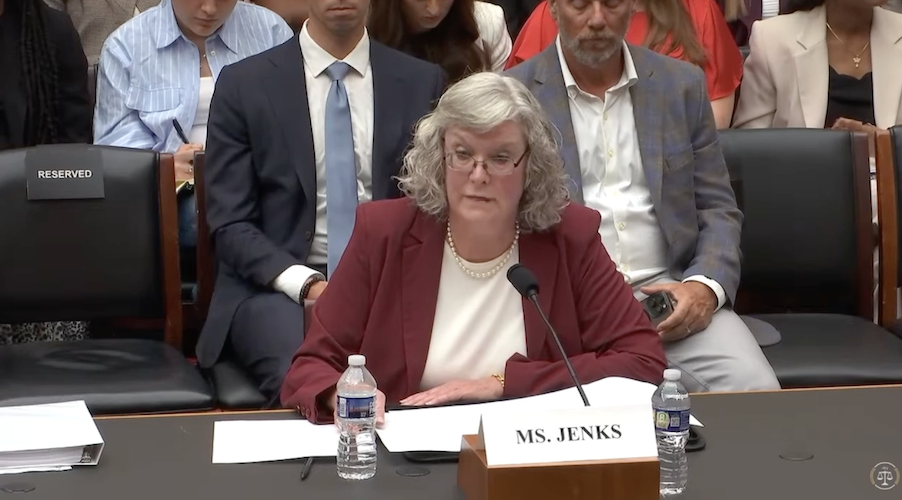
Video - IAP's Rosemary Jenks testifies before House Subcommittee on Birthright Citizenship
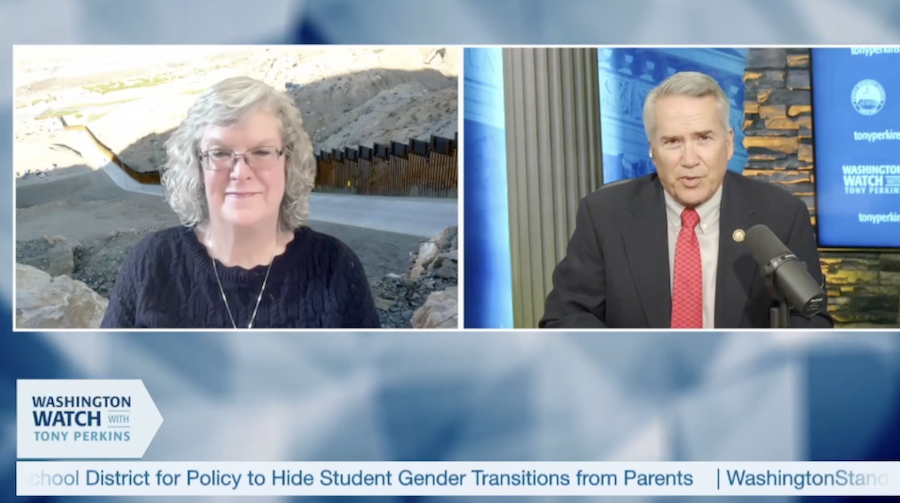
Video - Rosemary Jenks: Supreme Court erred in its Birthright Citizenship decision
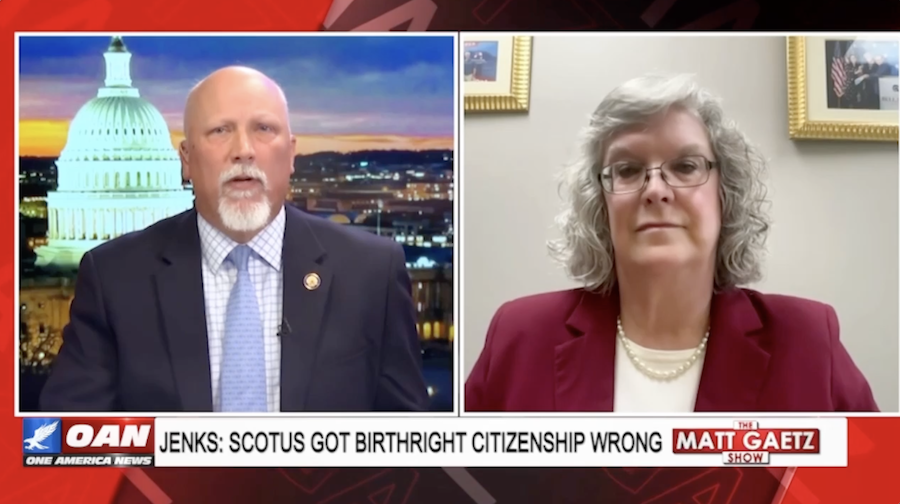
Video - Rosemary Jenks: Birth Tourism's threat to national security
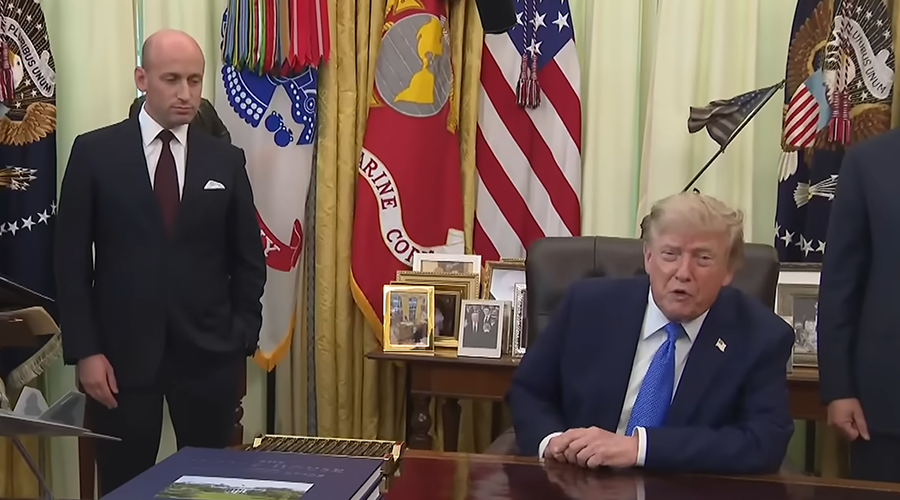
Commentary - President Trump's First Birthright Move Post-SCOTUS is Encouraging