H.R. 9200: Secure the Border Act of 2026
Quick Facts:
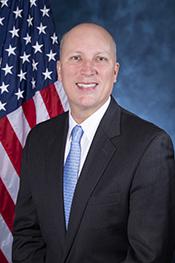
Bill Sponsor: Rep. Chip Roy (R-TX-21)
Congress: 119
Date Introduced: June 8, 2026
Last Action: Referred to the Subcommittee on Transportation and Maritime Security. (July 7, 2026)
Secure the Border Act of 2026
This bill mandates sweeping changes to immigration law, border enforcement, and employment policies by requiring the immediate resumption of physical border wall construction, severely restricting asylum eligibility and humanitarian parole, reversing existing settlement agreements to mandate the joint detention of migrant families, expediting the removal of unaccompanied alien children, and requiring all U.S. employers to use the free E-Verify system to confirm the legal work status of new and existing employees. Additionally, it sharply limits the use of the CBP One app, blocks funding to certain nongovernmental organizations (NGOs), and increases penalties for visa overstays and illegal entry.
DIVISION A--BORDER SECURITY
This division requires targeted, mandatory actions and investments related to securing the physical borders of the United States.
(Sec. 102) This section requires the Department of Homeland Security (DHS), within seven days of enactment, to resume all activities related to constructing a physical wall along the U.S.-Mexico border that were underway or planned prior to January 20, 2021, utilizing previously unexpired funds and unused materials.
(Sec. 103) This section imposes strict, expanded requirements on DHS related to the construction of physical barriers. The bill mandates that DHS construct a border wall (including related tactical infrastructure and technology) along at least 900 miles of the southwest border. Currently, DHS is only required to have at least 700 miles of reinforced fencing. It also fundamentally changes environmental and legal waivers: it requires (rather than merely authorizes) DHS to waive all legal requirements necessary to ensure the expeditious construction of the border barriers.
(Sec. 104) This section requires U.S. Customs and Border Protection (CBP) to submit a strategic five-year technology investment plan to Congress to mitigate security risks, prevent terrorist entry, combat drug and human smuggling, and facilitate legal trade.
(Sec. 105) This section imposes specific documentation, internal control, and acquisition-related standards on major border security technology acquisitions, generally defined as those costing at least $100 million based on FY2023 constant dollars.
(Sec. 106) This section requires CBP to (1) ensure each CBP officer or agent is equipped with a secure two-way communication device, (2) fully implement the Border Security Deployment Program (an integrated surveillance system) by September 30, 2025, and (3) upgrade license plate readers as needed at ports of entry along the northern and southern borders.
(Sec. 107) This section authorizes up to $100 million for retention bonuses for eligible frontline U.S. Border Patrol law enforcement agents (GS-12 or below). It also strictly mandates that CBP hire, train, and maintain an active-duty presence of at least 22,000 full-time equivalent Border Patrol agents by September 30, 2025.
(Sec. 108) This section modifies provisions to exempt certain applicants for CBP law enforcement positions from mandatory polygraph tests. For example, it provides this exemption to current, full-time federal, state, and local law enforcement officers with at least three years of continuous service in good standing, whereas previously the waiver was largely limited to eligible veterans. This waiver automatically terminates if CBP meets its 22,000 staffing requirement, but snaps back if levels fall below it again.
(Sec. 109) This section requires CBP to implement a formalized workload staffing model for the Border Patrol and CBP Air and Marine Operations to better manage and assign personnel based on operational environments and infrastructure.
(Sec. 110) This section provides explicit statutory authorization and $110 million annually (FY2024-2028) for Operation Stonegarden, a grant program for state, local, and tribal law enforcement agencies located in border states that are actively involved in CBP operations.
(Sec. 111) This section dictates aggressive operational tempos for CBP Air and Marine Operations. CBP must ensure its Air and Marine Operations carry out at least 110,000 flight hours each year, operate unmanned aircraft systems (drones) on the southern border 24 hours a day, and prioritize direct support to the Border Patrol.
(Sec. 112) This section requires DHS to hire contractors to eradicate specific invasive plant growth (carrizo cane and salt cedar) along the Rio Grande River that impedes border security visibility, with eradication to be completed by September 30, 2027.
(Sec. 113) This section requires the Border Patrol to issue a biennial Border Patrol Strategic Plan focusing on capability gaps, intelligence gathering to disrupt transnational criminal organizations, and integration of new technologies.
(Sec. 115) This section strictly prohibits DHS from (1) processing the entry of non-U.S. nationals arriving between designated ports of entry; (2) providing funds to NGOs that facilitate or encourage unlawful entry, human smuggling, or drug trafficking; and (3) providing funds to NGOs that provide lodging, transportation, or immigration legal services to inadmissible non-U.S. nationals.
(Sec. 116) This section requires DHS to ensure and certify within 14 days of enactment that CBP is fully compliant with all federal DNA and biometric collection requirements at U.S. land borders.
(Sec. 117) This section requires CBP to periodically review and update its inspection manuals and policies every three years to ensure uniform practices that effectively adapt to new tactics used for smuggling drugs and humans.
(Sec. 118) This section requires CBP to publish highly detailed monthly operational statistics about encounters with non-U.S. nationals, including total numbers, nationalities, gang affiliations, drug seizures, known "gotaways," and individuals on the terrorist screening database.
(Sec. 119) This section requires CBP to certify to Congress within seven days of enactment that it has real-time access to the criminal history databases of all countries of origin and transit for non-U.S. nationals encountered by CBP.
(Sec. 120) This section explicitly prohibits the Transportation Security Administration (TSA) from accepting immigration enforcement documents—such as ICE arrest warrants, notices to appear, or DHS employment authorizations—as valid proof of identification at airport security checkpoints. The TSA is also required to collect biometric information from unverified individuals entering sterile areas and share it with the Automated Biometric Identification System (IDENT).
(Sec. 121) This section legally bars DHS from issuing any COVID-19 vaccine mandate unless expressly authorized by Congress, and prohibits adverse actions against any employee for refusing a COVID-19 vaccine.
(Sec. 122) This section drastically limits the use of the CBP One mobile application (or any similar digital portal). Under the bill, DHS may only use such applications for the inspection of perishable cargo, terminating its use for migrant interview scheduling.
(Sec. 124 & 125) These sections require the Government Accountability Office (GAO) and the DHS Inspector General to study and report on the financial, educational, healthcare, and security costs incurred by border states and municipalities due to mass migration, and the feasibility of federal reimbursement for border security actions taken by states.
(Sec. 126) This section cuts off authorized funding for specific DHS programs, explicitly defunding the Alternatives to Detention Case Management Pilot Program, the Office of the Immigration Detention Ombudsman, and the purchase of electric vehicles for the Management Directorate.
(Sec. 128) This section requires the DHS Inspector General to assess CBP's ability to mitigate unmanned aircraft systems (drones) operated by cartels or others along the southwest border.
DIVISION B--IMMIGRATION ENFORCEMENT AND FOREIGN AFFAIRS
TITLE I--ASYLUM REFORM AND BORDER PROTECTION
This title imposes stringent new requirements to restrict asylum eligibility and limit the duration of employment authorizations.
(Sec. 101) This section expands provisions that bar individuals from applying for asylum if they can be removed to a "safe third country." It authorizes removal to third countries even if they do not have a formal agreement with the United States. It also explicitly bars an individual from applying for asylum if they traveled through at least one other country before arriving in the U.S., unless they can prove they applied for and were denied protection in that transit country, or were victims of severe human trafficking.
(Sec. 102) This section raises the standard for establishing an asylum applicant's "credible fear" of persecution during initial screenings. An asylum officer must find that the applicant is more likely than not able to establish eligibility for asylum (a higher burden of proof than the current "significant possibility" standard).
(Sec. 103) This section strictly limits asylum applications only to individuals who arrived in the United States lawfully at a designated port of entry.
(Sec. 104) This section vastly expands the list of crimes that render an individual ineligible for asylum. New disqualifying offenses include convictions for: identification fraud, driving while intoxicated causing serious injury or death, multiple DWI offenses regardless of injury, domestic violence, gang-related crimes, and any felony. It redefines "felony" to include any crime punishable by more than one year of imprisonment, regardless of how the state classifies it.
(Sec. 105) This section restricts employment authorizations for asylum applicants to a strict six-month duration (which can be renewed), but mandates the authorization cannot be granted until 180 days after the application is filed. It immediately terminates employment authorization if the asylum claim is denied.
(Sec. 106) This section requires DHS to charge a mandatory fee of at least $50 for each asylum application (waived only for unaccompanied alien children in removal proceedings), removing the agency's discretion to offer it for free.
(Sec. 107) This section radically narrows the definitions used to qualify as a refugee. It specifies that persecution cannot be based on infrequently enforced laws, or the actions of "rogue" government officials acting outside their official capacity. It redefines "particular social group" to ensure it exists independently of the alleged persecution and explicitly excludes groups based on gang membership, generalized violence, or interpersonal disputes. Furthermore, it prohibits favorable discretion for applicants who have been unlawfully present for over a year, or who failed to file or pay taxes.
(Sec. 108) This section establishes strict statutory definitions for "firm resettlement," preventing asylum claims if an individual resided in another country where they had any form of renewable legal status or simply resided there for a year or more without facing persecution before coming to the U.S.
(Sec. 109) This section codifies the definition of a "frivolous" asylum application, rendering an applicant permanently ineligible for immigration benefits if their claim was knowingly fabricated or filed solely to delay removal or obtain work authorization.
(Sec. 111) This section requires the Department of Justice to establish expedited adjudication procedures for asylum applicants who are nationals of sanctioned Western Hemisphere countries (such as Cuba, Nicaragua, and Venezuela).
TITLE II--BORDER SAFETY AND MIGRANT PROTECTION
(Sec. 201) This section mandates "expedited removal" (removal without further hearing or review) for individuals unlawfully present or who unlawfully entered the U.S. It mandates the detention of individuals subject to expedited removal, even if they express an intention to apply for asylum. Crucially, if DHS cannot detain these individuals or remove them to a third country, DHS must return them to the contiguous foreign territory they traveled through (i.e., reinstating the "Remain in Mexico" policy) while their case is pending.
(Sec. 202) This section requires DHS to reopen or restore all ICE detention facilities that were in operation as of January 20, 2021, explicitly naming facilities in Georgia, Massachusetts, Alabama, Florida, and Texas.
TITLE III--PREVENTING UNCONTROLLED MIGRATION FLOWS IN THE WESTERN HEMISPHERE
(Sec. 302 & 303) These sections require the Department of State to aggressively negotiate agreements with Western Hemisphere countries (specifically naming Mexico, Honduras, El Salvador, and Guatemala) to share the burden of asylum processing and regional immigration enforcement, and requires mandatory briefings to Congress on these efforts.
TITLE IV--ENSURING UNITED FAMILIES AT THE BORDER
(Sec. 401) This section nullifies the 1997 Flores settlement agreement's applicability to accompanied alien minors. It explicitly states there is no legal presumption that an accompanied child should be released from detention. If an adult enters unlawfully with their child, DHS is mandated to detain the adult and child together in a family residential center. It also preempts state laws attempting to impose licensing requirements on these federal family detention facilities.
TITLE V--PROTECTION OF CHILDREN
(Sec. 502) This section alters the treatment of unaccompanied alien children (UACs) to expedite their removal. It eliminates current distinctions between children from contiguous countries (Mexico/Canada) and non-contiguous countries, requiring DHS to swiftly repatriate all UACs unless they are victims of severe trafficking or possess a credible fear of persecution. Before placing a child with a sponsor in the U.S., HHS must verify the sponsor's immigration status; if the sponsor is unlawfully present, DHS must initiate removal proceedings against them.
(Sec. 503) This section tightens eligibility for Special Immigrant Juvenile (SIJ) visas (which protect abused, abandoned, or neglected minors). Currently, a child can qualify if reunification with just one parent is not viable. This section changes the standard so the child is disqualified if reunification is possible with any parent or legal guardian.
TITLE VI--VISA OVERSTAYS PENALTIES
(Sec. 601) This section dramatically increases civil penalties for unlawful entry (raising minimum fines from $50 to $500). Furthermore, it establishes strict criminal penalties for overstaying a visa: an individual who overstays for 10 days or more faces up to six months in prison for a first offense, and up to two years for subsequent offenses, alongside mandatory civil fines.
TITLE VII--IMMIGRATION PAROLE REFORM
(Sec. 701 - 703) This title strips DHS of the ability to grant humanitarian parole to entire classes of people (terminating class-based parole programs). It explicitly restricts parole to a strict, case-by-case basis for narrow, specified urgent humanitarian reasons (such as a medical emergency or funeral) or significant public benefit (assisting in a law enforcement matter). It grants states and individuals the right to sue the federal government if they suffer financial harm due to a violation of these parole limits.
TITLE VIII--LEGAL WORKFORCE
This title establishes a mandatory, nationwide electronic employment eligibility verification system (modeled on E-Verify) for all U.S. employers, fundamentally changing hiring laws.
(Sec. 801) This section requires all employers to use the new verification system to confirm the identity and legal work status of new employees. It establishes strict procedures for "tentative nonconfirmations" (which give the employee time to appeal) and "final nonconfirmations" (which require the employer to terminate the employee or face penalties). The mandate phases in based on employer size:
-
10,000+ employees: 6 months after enactment.
-
500 to 9,999 employees: 12 months.
-
20 to 499 employees: 18 months.
-
1 to 19 employees: 24 months.
-
Agricultural employers: 36 months. It also requires employers to reverify employees with limited work authorizations and previously hired employees in certain sensitive government or cleared positions.
(Sec. 802 & 803) These sections require DHS to establish and administer the system, ensuring initial responses within 3 working days and secondary verification resolutions within 10 days. The mandate also applies to unions and labor service agencies that recruit or refer individuals for employment.
(Sec. 804 & 805) Employers acting in good faith are shielded from civil liability if the system makes an error. The title preempts state and local laws regarding employment verification, though states may use business licensing penalties to enforce the federal mandate.
(Sec. 807) This section drastically increases civil and criminal monetary penalties for hiring unauthorized workers or failing to use the system, up to $25,000 per violation. It also grants DHS the authority to debar repeat violators from receiving federal contracts and establishes an office specifically to process tips from state and local governments regarding hiring violations.
(Sec. 808 - 813) These sections expand criminal definitions of document fraud to include work authorization documents, mandate data sharing between DHS and the Social Security Administration (SSA) to block compromised social security numbers, allow parents to "lock" their children's SSNs to prevent identity theft, and require Inspector General audits of mismatched SSNs.
(Sec. 816) This section explicitly nullifies two recent Department of Labor final rules (from October 2022 and February 2023) related to wage rates and joint employment regulations for the H-2A temporary agricultural worker program.
Rep. Andy Biggs (R-AZ-5) (June 8, 2026)
Rep. Scott Perry (R-PA-10) (June 8, 2026)
Rep. Michael Cloud (R-TX-27) (June 8, 2026)
Rep. Andrew Clyde (R-GA-9) (June 8, 2026)
Rep. Byron Donalds (R-FL-19) (June 8, 2026)
Rep. Lauren Boebert (R-CO-4) (June 8, 2026)
Rep. Andy Ogles (R-TN-5) (June 8, 2026)
Rep. Clay Higgins (R-LA-3) (June 8, 2026)
Rep. Andy Harris (R-MD-1) (June 9, 2026)
Rep. Keith Self (R-TX-3) (June 9, 2026)