H.R. 9199: Permanent Trump Secure Border Act
Quick Facts:
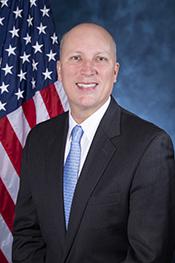
Bill Sponsor: Rep. Chip Roy (R-TX-21)
Congress: 119
Date Introduced: June 8, 2026
Last Action: Referred to the Subcommittee on Oversight, Investigations, and Accountability. (July 7, 2026)
Permanent Trump Secure Border Act This bill makes various changes to immigration law, primarily by imposing limits on asylum eligibility and mandating border wall construction. (Note: Unlike H.R. 2, this bill does not contain the sweeping E-Verify and legal workforce mandates).
DIVISION A—BORDER SECURITY
This division requires certain actions related to border security.
-
(Sec. 102) Requires the Department of Homeland Security (DHS) to resume all activities related to constructing a wall along the U.S.-Mexico border that were underway or planned prior to January 20, 2021.
-
(Sec. 103) Imposes additional requirements on DHS related to the construction of barriers. DHS must construct a border wall (including related infrastructure and technology) along at least 900 miles of the southern border. DHS is required to waive all legal requirements necessary to ensure expeditious construction.
-
(Sec. 104) Requires U.S. Customs and Border Protection (CBP) to submit a strategic five-year technology investment plan to Congress.
-
(Sec. 105) Imposes documentation and acquisition-related standards on major border security technology acquisitions (generally those costing at least $100 million).
-
(Sec. 106) Requires CBP to ensure officers/agents are equipped with two-way communication devices, fully implement the Border Security Deployment Program, and upgrade license plate readers at ports of entry.
-
(Sec. 107) Authorizes retention bonuses for eligible frontline U.S. Border Patrol agents and requires CBP to maintain an active duty presence of at least 22,000 full-time equivalent agents by September 30, 2025.
-
(Sec. 108) Expands polygraph testing exemptions for certain applicants for CBP law enforcement positions (e.g., current law enforcement officers).
-
(Sec. 109) Requires CBP to implement a workload staffing model for the Border Patrol and CBP Air and Marine Operations.
-
(Sec. 110) Provides statutory authorization for Operation Stonegarden, which provides grants to law enforcement agencies in border states involved in CBP operations.
-
(Sec. 111) Mandates CBP Air and Marine Operations to carry out at least 110,000 flight hours each year and operate unmanned aircraft systems (drones) on the southern border 24 hours a day.
-
(Sec. 112) Requires DHS to begin eradicating plant growth (such as carrizo cane and salt cedar) along the Rio Grande River that impedes operations.
-
(Sec. 113) Requires the Border Patrol to issue a Border Patrol Strategic Plan.
-
(Sec. 115) Prohibits DHS from processing the entry of aliens arriving between ports of entry; prohibits providing funds to nongovernmental organizations (NGOs) that facilitate unlawful activity; and prohibits funding NGOs that provide services, such as lodging or legal aid, to inadmissible aliens who enter the United States.
-
(Sec. 116) Requires CBP to be fully compliant with federal DNA and biometric collection requirements at U.S. land borders within 14 days of enactment.
-
(Sec. 117) Requires CBP to periodically review and update manuals related to inspections at ports of entry to effectively detect illegal activity, such as smuggling.
-
(Sec. 118) Requires CBP to publish monthly data on encounters, including the total number of encounters and the nationalities of the aliens involved.
-
(Sec. 119) Requires CBP to certify to Congress that it has real-time access to the criminal history databases of all countries of origin and transit for aliens encountered.
-
(Sec. 120) Prohibits the Transportation Security Administration (TSA) from accepting ICE warrants or DHS employment authorizations as proof of identification. The TSA must collect biometric information from individuals seeking airport access without accepted ID whose U.S. nationality cannot be verified.
-
(Sec. 121) Prohibits DHS from issuing any COVID-19 vaccine mandate unless expressly authorized by Congress, or taking adverse actions against employees who refuse the vaccine.
-
(Sec. 122) Limits the use of the CBP One mobile application exclusively to the inspection of perishable cargo.
-
(Sec. 124) Requires the GAO to study and report on the costs incurred by states in securing the southwest border and the feasibility of federal reimbursement.
-
(Sec. 125) Requires the DHS Inspector General to annually report on the economic and security impacts of mass migration to municipalities and states.
-
(Sec. 126) Specifies that no funds are authorized for certain DHS activities, including alternatives to detention or purchasing electric vehicles.
-
(Sec. 128) Requires a report assessing CBP's ability to mitigate unmanned aircraft systems along the border.
DIVISION B—IMMIGRATION ENFORCEMENT AND FOREIGN AFFAIRS
TITLE I—ASYLUM REFORM AND BORDER PROTECTION
This title imposes additional, stricter requirements for asylum eligibility.
-
(Sec. 101) Bars an individual from applying for asylum if they traveled through at least one third country before arriving in the United States, with limited exceptions. Authorizes removal to third countries even without a formal agreement in place.
-
(Sec. 102) Modifies the credible fear standard. An asylum officer must find it is more likely than not that the applicant could establish asylum eligibility.
-
(Sec. 103) Limits asylum eligibility exclusively to aliens who arrived at a designated port of entry.
-
(Sec. 104) Expands the types of crimes that make an individual ineligible for asylum, notably broadening the definition of a felony to include any crime punishable by more than one year of imprisonment.
-
(Sec. 105) Limits employment authorization for asylum applicants to a six-month duration.
-
(Sec. 106) Requires DHS to charge a fee for each asylum application (except for unaccompanied alien children).
-
(Sec. 107) Stiffens qualifications for refugees. Membership in a particular social group cannot be defined solely as the victims of alleged persecution. Furthermore, favorable discretion is heavily limited for applicants who have been unlawfully present for over a year or failed to file taxes.
-
(Sec. 108) Broadens the conditions under which an asylum applicant is considered to have "firmly resettled" in another country, barring them from U.S. asylum.
-
(Sec. 109) Establishes a strict statutory definition of a "frivolous" asylum application.
-
(Sec. 111) Requires DOJ to expedite the adjudication of asylum applications for nationals of sanctioned Western Hemisphere countries (e.g., Cuba, Nicaragua, Venezuela) in formal removal proceedings.
TITLE II—BORDER SAFETY AND MIGRANT PROTECTION
-
(Sec. 201) Requires expedited removal for illegal aliens who are unlawfully present or unlawfully entered. Mandates detention for those subject to expedited removal or awaiting an asylum claim. If DHS cannot detain them or remove them to a safe third country, they must be returned to the contiguous country they traveled through ("Remain in Mexico"). Authorizes states to sue DHS to enforce these requirements.
-
(Sec. 202) Requires DHS to reopen or restore all ICE detention facilities that were in operation on January 20, 2021.
TITLE III—PREVENTING UNCONTROLLED MIGRATION FLOWS IN THE WESTERN HEMISPHERE
-
(Sec. 302 & 303) Requires the State Department to negotiate agreements with Western Hemisphere countries on burden sharing and processing of asylum seekers, and to brief Congress on its progress.
TITLE IV—ENSURING UNITED FAMILIES AT THE BORDER
-
(Sec. 401) Statutorily dictates that there is no presumption against detaining alien children. Replaces the Flores settlement agreement with statutory guidelines. Requires DHS to detain adults and their children together if the only charge against the adult is unlawful entry. Preempts states from imposing licensing requirements on immigration detention facilities.
TITLE V—PROTECTION OF CHILDREN
-
(Sec. 502) Eliminates the distinction between unaccompanied alien children from contiguous vs. non-contiguous countries, requiring DHS to swiftly remove them regardless of origin, absent trafficking or a credible fear of persecution. Tightens deadlines for hearings and mandates DHS tracking of the immigration status of individuals who sponsor unaccompanied minors.
-
(Sec. 503) Restricts Special Immigrant Juvenile (SIJ) visas by disqualifying individuals if reunification is possible with any parent or legal guardian.
TITLE VI—VISA OVERSTAYS PENALTIES
-
(Sec. 601) Increases civil penalties for unlawful entry to $500–$1,000. Establishes criminal penalties for overstaying a visa by 10 days or more, subjecting violators to fines and/or imprisonment.
TITLE VII—IMMIGRATION PAROLE REFORM
-
(Sec. 701) Strictly limits DHS's authority to grant parole, restricting it to specific case-by-case bases for urgent humanitarian reasons or significant public benefit, and prohibiting its use for entire classes of individuals.
TITLE VIII—REPEALING REGULATIONS
(Note: H.R. 2's Title VIII established mandatory E-Verify and legal workforce regulations. H.R. 9199 removes those provisions entirely and repurposes this title solely for the following regulation repeals).
-
(Sec. 801) Nullifies two Department of Labor final rules related to H-2A temporary agricultural workers (specifically those modifying joint employer definitions, housing standards, and adverse effect wage rate methodologies).
Rep. Scott Perry (R-PA-10) (June 8, 2026)
Rep. Michael Cloud (R-TX-27) (June 8, 2026)
Rep. Byron Donalds (R-FL-19) (June 8, 2026)
Rep. Lauren Boebert (R-CO-4) (June 8, 2026)
Rep. Andy Ogles (R-TN-5) (June 8, 2026)
Rep. Clay Higgins (R-LA-3) (June 8, 2026)
Rep. Andy Harris (R-MD-1) (June 9, 2026)
Rep. Keith Self (R-TX-3) (June 9, 2026)
Rep. Wesley Hunt (R-TX-38) (June 9, 2026)
Rep. Mark Harris (R-NC-8) (June 10, 2026)
Rep. Andrew Clyde (R-GA-9) (June 15, 2026)
Rep. Paul Gosar (R-AZ-9) (June 15, 2026)
Rep. Ronny Jackson (R-TX-13) (June 22, 2026)
Rep. Ralph Norman (R-SC-5) (July 9, 2026)
Rep. Sheri Biggs (R-SC-3) (July 20, 2026)