H.R. 7148: Consolidated Appropriations Act, 2026
Quick Facts:
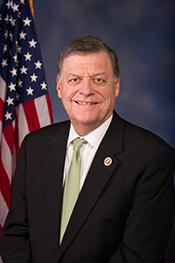
Bill Sponsor: Rep. Tom Cole (R-OK-4)
Congress: 119
Date Introduced: Jan. 20, 2026
Last Action: Became Public Law No: 119-75. (Feb. 3, 2026)
Consolidated Appropriations Act, 2026
This bill funds several agencies for the duration of FY26, and includes various immigration-related provisions:
H-2B Visa Provisions
-
Seafood Industry Flexibility: Permits employers in the seafood industry to bring H-2B nonimmigrants into the U.S. at any point during a 120-day window starting from the approved date of need without filing a new petition. If bringing workers in after 90 days, the employer must conduct a new local labor market assessment and offer the position to any equally or better-qualified U.S. worker who is available (Sec. 109).
-
Prevailing Wage Rules: Mandates that the prevailing wage for the H-2B program will be the greater of the actual wage paid to employees with similar qualifications or the prevailing wage for the occupation in that geographic area. The Secretary of Labor is directed to accept private wage surveys to determine these rates (Sec. 110).
-
Enforcement Restrictions: Prohibits any funds in the bill from being used to enforce the Department of Labor's "corresponding employment" definition or the "three-fourths guarantee rule" for temporary workers under the H-2B program (Sec. 111).
H-1B Visas & Foreign Labor
-
H-1B Workforce Training Grants: Restricts specific grant funds to be used exclusively to train U.S. individuals for the specific occupations and industries where employers are currently using H-1B visas to hire foreign workers (Sec. 104).
-
Foreign Labor Certifications: Allocates $84.8 million for the administration of foreign labor certifications under the Immigration and Nationality Act.
Unaccompanied Alien Children & Refugee Assistance
-
Funding Allocation: Appropriates over $5.16 billion for refugee and entrant assistance activities.
-
Private Donations: Authorizes the Department of Health and Human Services (HHS) to accept donations from private entities and NGOs (such as medical goods, school supplies, and clothing) for the care of unaccompanied alien children (Sec. 230).
-
Facility Licensing Restrictions: Prohibits housing unaccompanied alien children in facilities that are not State-licensed. The only exception is if the Secretary determines an unlicensed influx facility is necessary on a temporary basis. These facilities are strictly bound to mandated staffing ratios and specific requirements under the Flores Settlement Agreement (Sec. 231).
-
DHS Custody & Influx Notification: Requires a 15-day advance notification to Congress before operationalizing an unlicensed facility. The notification must include an analysis demonstrating that, without the facility, unaccompanied alien children would be left in Department of Homeland Security (DHS) custody for longer than 72 hours (Sec. 232).
-
Congressional Oversight: Prohibits using funds to prevent U.S. Senators or Representatives from entering and conducting oversight at any facility housing unaccompanied alien children, provided they give two business days' notice (Sec. 233).
-
Separation Reporting: Requires monthly reports to Congress detailing the number, ages, and causes of separation for children who were separated from their parents or legal guardians by DHS and subsequently classified as unaccompanied alien children (Sec. 234).
Immigration Fund Rescissions
-
Unobligated Funds: Permanently rescinds $206 million in unobligated funds from the Immigration and Nationality Act Section 286(s)(2) account (Sec. 116).